
There are a lot of different wood types out there, each with a range of qualities that affect how the wood performs in different environments. These qualities are important to consider before choosing your next garden gate. At Wooden Gate Makers, we make our gates from either softwood or hardwood using materials such as Redwood, Sapele, Iroko, and European Oak. Below, we discuss the advantages and disadvantages of each wood type and advise on which to choose for your specific garden gate.
Redwood Garden Gates

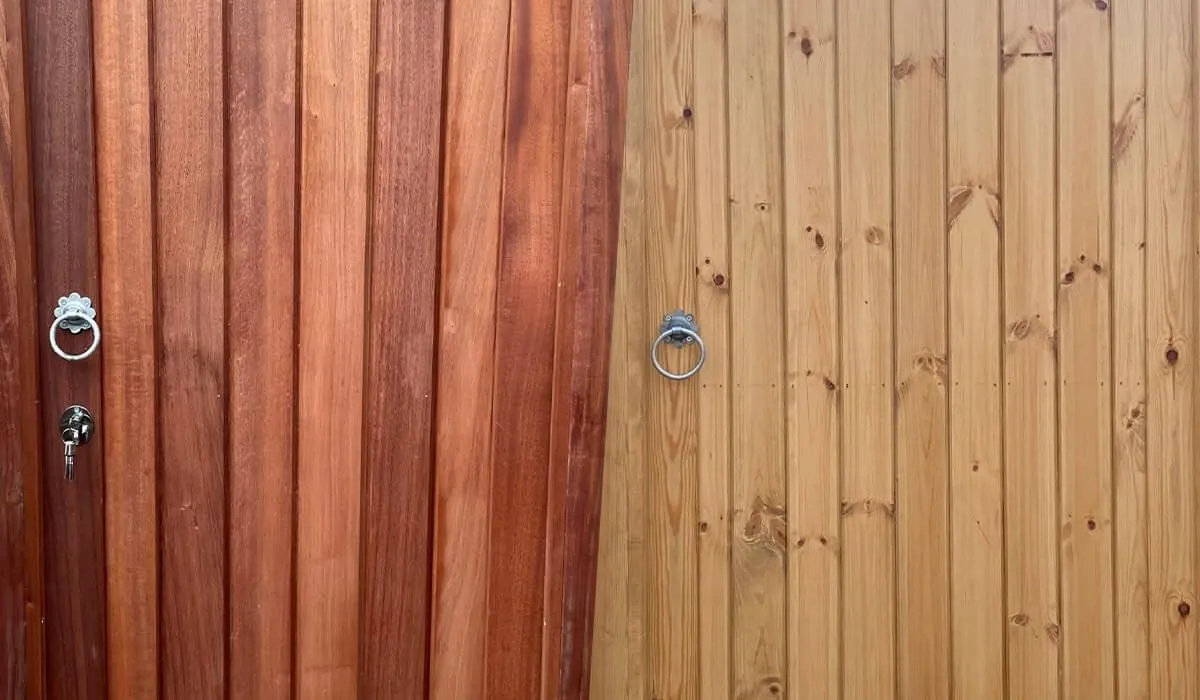
Redwood is our primary softwood option, which sets it apart from the hardwoods featured later. Redwood is highly prized for its natural beauty, stability, workability, and sustainability. These characteristics make it a popular choice for outdoor structures such as garden gates.
Advantages of Redwood Garden Gates
– Rich reddish-brown colour and attractive appearance.
– Stability with minimal warping compared to many other woods.
– Easy workability, which can reduce manufacturing time and costs.
– Reasonable durability and good resistance to decay, insects, and rot.
– Sustainable sourcing from regenerative redwood forests.
Disadvantages of Redwood Garden Gates
– Prone to sun damage and UV fading if not adequately protected; continuous exposure to direct sunlight can cause the wood to lose its original colour and develop a greyish tone over time.
– As a softwood, redwood gates require regular treatment and can scratch more easily compared to hardwoods.
Why Choose a Redwood Garden Gate
Consider choosing redwood for its cost-effective nature and excellent aesthetic properties. If your budget is tight, softwoods are usually cheaper, and redwood in particular offers an attractive reddish hue.
Sapele Garden Gates

With its rich reddish-brown colour, interlocking grain pattern, and inherent strength, sapele wood offers a unique blend of beauty and resilience. It’s a popular choice for garden gates and is often compared to mahogany in appearance.
Advantages of Sapele Garden Gates
– Captivating aesthetics resembling mahogany.
– Subtle chatoyancy for added visual interest.
– Excellent dimensional stability.
– High strength and durability.
– Resistance to decay, rot, and insects.
– Sustainable sourcing that supports environmental consciousness.
Disadvantages of Sapele Garden Gates
– Prone to water stains when exposed to moisture or high humidity over extended periods if not properly sealed or maintained.
– Potential for colour variation and grain pattern inconsistency, which might make achieving a uniform look challenging.
Why Choose Sapele Garden Gates
Choose sapele if you love the appearance of mahogany but are looking for a more affordable and sustainable option for your wooden garden gates.
Iroko Garden Gates
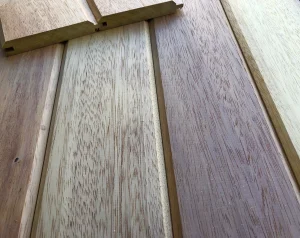
Iroko wood is renowned for its exceptional durability, distinctive grain patterns, and versatility. This hardwood boasts a warm golden- to medium-brown hue and matures gracefully over time.
Advantages of Iroko Garden Gates
– Extremely durable, being only marginally less dense than oak.
– Excellent stability with minimal warping and shrinking in response to temperature and humidity changes.
– Unique grain patterns that add character and visual interest.
– Over time, its golden-brown colour naturally matures into a silvery-grey hue, a process known as “iroko silvering” or “iroko patina”.
Disadvantages of Iroko Garden Gates
– Workability challenges due to its high density and interlocking grain can make it moderately difficult to work with.
– Higher costs as a result of its challenging workability.
Why Choose Iroko Garden Gates
Choose iroko if you favour the look of teak wood but want a more sustainable option. Thanks to its hardwearing properties, it’s a great choice for robust garden gates.
European Oak Garden Gates

European oak is well known for its durability and classic appearance. It features distinctive grain patterns and warm tones, bringing a touch of natural elegance to any garden gate.
Advantages of European Oak Garden Gates
– Aesthetic appeal with distinct grain patterns.
– Exceptional durability and strength.
– High resistance to warping.
– Longevity and enduring quality.
Disadvantages of European Oak Garden Gates
European oak tends to be reasonably expensive compared to other woods due to its slow growth and the extra time required to work with such a dense material.
Why Choose European Oak Garden Gates
Choose European oak if you desire particularly dense and weighty garden gates with excellent longevity.
Incredible Garden Gates from Wooden Gate Makers
Now that you have an overview of the wood types we offer, we hope you feel more confident about choosing the right material for your next garden gate. All our wood is sourced from top-quality producers and crafted by expert craftsmen to create stunning gates that elevate gardens and offer outstanding longevity.
For more information, give us a call on 01202 670770 or send us a message via our contact form.
0 Comments