
Fitting A Garden Gate is a search phrase typically used by homeowners who already know a gate is needed and now want to make sure it is fitted correctly. It often comes after a poor experience with an old gate that drags, drops, or never quite closes properly, or when a new fence or garden layout has created the need for controlled access.
This page explains what fitting a garden gate actually involves beyond simply hanging a gate on hinges. It focuses on planning, installation quality, and long-term performance, helping you compare installers with confidence and understand what good workmanship looks like before requesting a quote or booking a measuring visit.
What You Should Expect From A Professional Fitting A Garden Gate Service
A professional service for fitting a garden gate should start with understanding how the gate will be used. Some gates are opened many times a day, while others are mainly there to define boundaries or improve security.
You should expect a careful assessment of the opening. Width, height, ground levels, and the condition of nearby fencing or walls all influence how the gate should be fitted.
Post installation is a key part of the service. A well-fitted garden gate relies on solid, properly installed posts that resist movement over time.
Material suitability should also be discussed. Timber and metal gates behave differently outdoors, and the installer should explain which option suits the location and usage rather than defaulting to a single solution.
A professional fitting service should also cover security and ease of use. Hinges, latches, and fixings should be chosen to match both the gate weight and how it will be used day to day.
How To Compare Options Properly
When comparing options for fitting a garden gate, it helps to look beyond the gate itself and focus on how it will be supported.
Start by comparing post specifications. Post size, material, and installation depth are critical for preventing sagging and movement.
Look closely at hinge choice. Hinges should be appropriate for the weight and size of the gate, not just selected for appearance.
Consider how the gate will open and close. Clearance, swing direction, and nearby paths or planting all affect how practical the gate will be once fitted.
Finish and treatment are also important comparison points. These affect not only how the gate looks but how often maintenance will be required.
Comparing like for like helps avoid choosing a cheaper option that cuts corners on installation rather than the gate itself.
Common Mistakes And Red Flags
One common mistake when fitting a garden gate is underestimating ground conditions. Uneven or sloping ground needs to be accounted for during installation, not adjusted around afterwards.
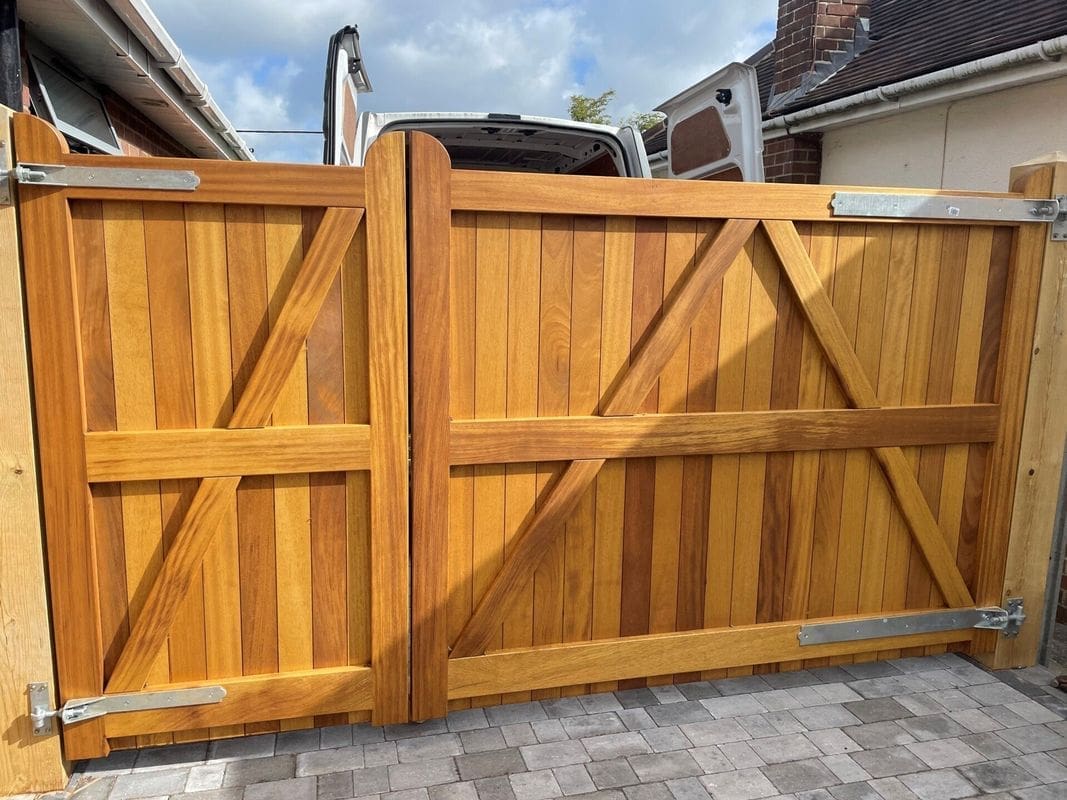
Another issue is lightweight construction. Gates without proper framing or bracing often twist or drop within a short time.
Vague quotes are a clear red flag. If post installation, fixings, or adjustments are not clearly described, it becomes difficult to judge quality.
Poor measuring is another frequent problem. Garden openings are rarely perfectly square, and ignoring this often leads to scraping, uneven gaps, or latches that do not align.
Be cautious of installers who promise very fast fitting without proper assessment. Quality fitting takes time and planning.
What A Good Quote Or Proposal Should Look Like
A good proposal for fitting a garden gate should be clear and detailed. It should describe the gate size, material, and finish in writing.
Post specification should be included. This covers post material, dimensions, and how they will be installed into the ground.
Installation details should be clearly listed. Hinges, latches, locks, and fixings should all be included rather than assumed.
You should see reference to site conditions. Ground levels, fencing, walls, and access restrictions should be acknowledged.
Timescales should be realistic. Knowing when measuring, manufacture, and fitting will take place helps manage expectations.
Any exclusions should be stated clearly to avoid misunderstandings later.
Questions To Ask Before You Book
Before committing to fitting a garden gate, it is sensible to ask questions that clarify experience and approach.
-
What materials are recommended for this location
-
How are posts installed to prevent movement over time
-
How will the gate cope with uneven or sloping ground
-
What hinges are used for the gate weight
-
Are latches, locks, and fixings included
-
How will the gate be adjusted after fitting
-
What maintenance will be required in future
-
How long should the gate last with normal use
-
What aftercare support is provided
Clear, specific answers usually indicate a professional service.
What The Process Usually Looks Like
Fitting a garden gate usually follows a structured process designed to avoid problems later.
-
Initial discussion about access, usage, and layout
-
Accurate on-site measuring and assessment
-
Preparation and installation of posts
-
Hanging and aligning the gate with final adjustments
Following this order helps ensure the gate fits correctly and operates smoothly.
Aftercare And Ongoing Support
Aftercare is an important part of owning a garden gate. Gates are exposed to weather and regular movement, so periodic checks matter.
You should receive advice on caring for the gate surface, whether that involves re-treating timber or inspecting metal finishes.
Hinges and fixings should be checked occasionally to maintain smooth operation and security.
Small adjustments over time are normal. Knowing who to contact for support adds reassurance.
Wooden Gate Makers regularly advise homeowners on aftercare expectations so fitted garden gates continue to perform as intended.
Next Steps For Fitting A Garden Gate
Once you understand what fitting a garden gate involves, the next step is to assess your own garden access carefully.
Measure the opening, note ground conditions, and consider how often the gate will be used. These details help narrow down suitable options.
It is also useful to think about future changes, such as fencing updates, planting, or altered access routes.
From there, a clear proposal can be prepared that reflects practical requirements, durability, and how the gate fits within the garden layout.
Find Out More
If you are planning on fitting a garden gate and want clear, practical advice based on your garden layout, you can start by sharing a few details about your opening and access needs. From there, a measuring visit or quotation can be arranged to explore suitable options.
0 Comments