
A wooden garden or driveway gate can add a lot of character to your property. Whilst choosing your gate’s style is based on visual preference, knowing which wood option to choose can be less obvious and will depend on several factors.
In this guide, we break down the pros and cons of softwood and hardwood gates and which wood would be the best option for you.
What is a softwood gate?
A softwood gate is a gate made using timber from a softwood tree, such as pine, redwood, larch, fir or cedar. Softwoods get their name because they are easy to cut and are more workable than hardwoods. All our softwood gates are manufactured using joinery grade redwood, which has a light brown appearance.
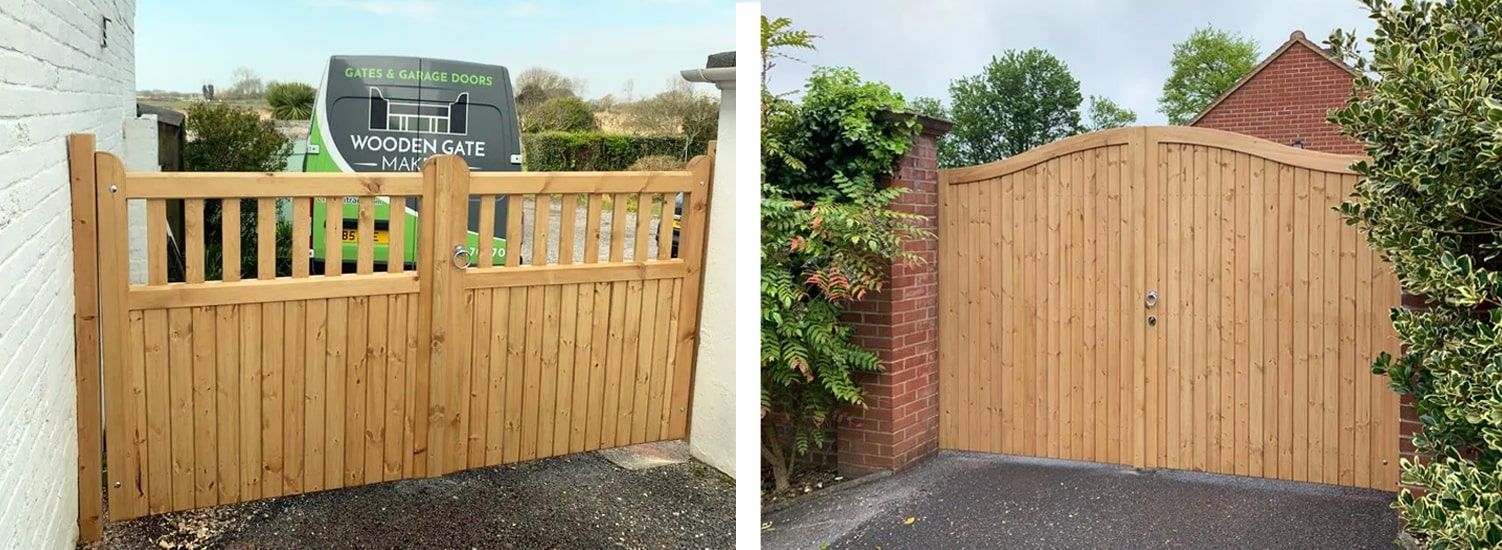
Benefits of a softwood gate:
- Less expensive that hardwood
- Lifespan averaging 9-10 years
Disadvantages of a softwood gate:
- Less durable
- Can degrade quickly without treatment
- Fewer wood options
What is a hardwood gate?
A hardwood gate is a gate made using timber from a hardwood tree, such as oak, teak, walnut, sapele or iroko. Hardwoods are much more durable than softwoods, with a stronger cellular composition which ensures its longevity.
Hardwood trees take longer to grow than softwood trees, which is one reason for their greater price point. We manufacture our hardwood gates using sapele, iroko and European oak.
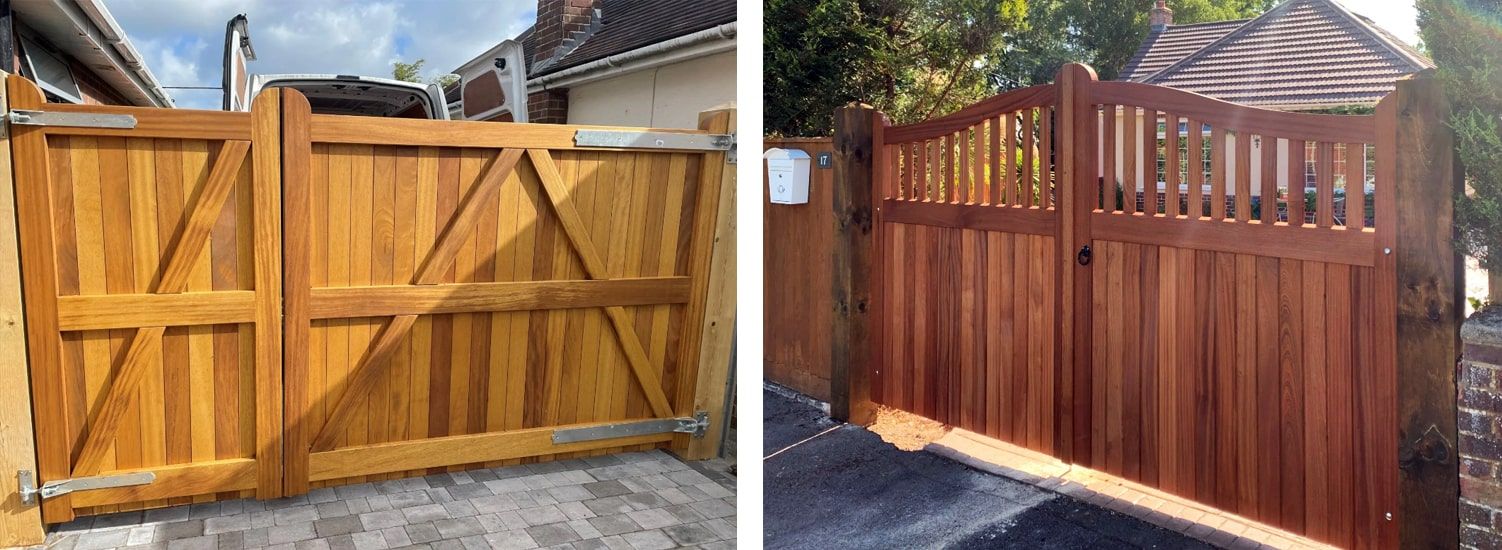
Sapele Gates
Sapele is from the Mahogany family and has a luxurious red-brown appearance. It retains its colour well as it ages.
Iroko Gates
Iroko is a highly durable timber from the Teak family. It has a varied golden-brown appearance. As it ages, the wood turns silver in colour.
European Oak Gates
One of the most common hardwood options used for outdoor gates due to its durability, oak gates can come in colours ranging from tan through to silver. However, oak can be prone to surface checking and splitting, though this will not usually compromise the gate’s integrity.
Benefits of a hardwood gate:
- More durable than softwood
- Lifespan averaging 30+ years
- Superior wood grain
- Lower wood knot count
- More wood options
Disadvantages of a hardwood gate:
- More expensive than softwood
Durability
Winner: hardwood gates
When it comes to durability, a hardwood gate can’t be beat. Even without treatment, a hardwood gate can be left in all weather conditions for several decades without compromising its strength, though treatment will help to keep its aesthetic appearance intact. You can reasonably expect your hardwood gate to remain in great condition for more than 30 years!
On the other hand, softwood gates without treatment can rot and warp when exposed to moisture, so regular maintenance is essential. However, even with annual treatment, a softwood gate’s average lifespan is no longer than 10 years.
Cost
Winner: softwood gates
If you are looking for a more budget-friendly option, then a softwood gate is the best choice for you. However, if you want a more long-term option that requires minimal upkeep and maintenance, a hardwood gate is the best option, as it will outlast a softwood gate by several decades.
Appearance
Winner: Hardwood Gates
Hardwood contains less knots and grain imperfections than softwood, which can make hardwood gates much more attractive to look at, they also tend to have a richer colour.
Which wood should you choose for your gate?
The choice is ultimately yours! If you are looking for a more budget-friendly option and don’t mind the shortcomings,then a softwood gateis ideal. On the other hand, if you desire an outdoor gate that will stand the test of timefor decades to comeand provide your home’s exterior with a real touch of elegance, then a hardwood gate cannot be topped.
Looking for further advice and guidance? Contact our expert team! We have fitted hundreds of wooden gates for customers across Dorset and further afield. Call us today on 01202 601202 – we would be happy to advise you.
Looking for more inspiration? Check out some of our previous installations!

0 Comments